Self-Custody Wallet Adoption 2026: Users, Smart Accounts, Passkeys
How many people really hold their own crypto keys in 2026: active wallet data, Safe smart accounts, EIP-7702, passkeys, regional growth and theft risk.

Key takeaways
- Around 716 million people own crypto but only 40 to 70 million are active users, and self-custody remains a minority habit growing from a small base.
- Smart accounts, EIP-7702 and passkeys are replacing the seed phrase, with Safe alone at 61.11 million accounts and $35.25 billion secured in Q1 2026.
- Personal wallet compromises reached 158,000 in 2025, averaging about $8,900 per victim, so recovery and limits matter as much as convenience.
A pharmacist in Cordoba keeps her savings in dollar stablecoins on her phone, in a wallet whose keys no bank or exchange can freeze. She is part of the sharpest wallet surge anywhere: mobile wallet activity in Argentina rose sixteenfold over the year to mid-2025, according to a16z's State of Crypto report. Yet the global picture is more sobering than the Argentine one. Hundreds of millions of people own crypto. Only a small fraction hold their own keys and use them in a given month.
This piece looks at what the data actually says about self-custody in 2026: how many people use it, where growth is coming from, how smart accounts and passkeys are replacing the twelve-word seed phrase, and what the theft numbers tell us about the cost of being your own bank.
Owners are not users
The most quoted number in crypto is ownership. a16z estimated that around 716 million people own some crypto, up 16% in a year, as summarised by BitPinas. The more useful number is the one next to it: only 40 million to 70 million are active users. That is a ratio of roughly ten owners for every active user.
Most of the 716 million hold crypto on an exchange, which keeps the keys. A self-custody wallet is different: the user holds the credential that signs transactions, and nobody can reverse or block a transfer. We set out the trade-offs in self-custody versus custodial wallets. The honest summary is that self-custody is still a minority habit, growing fast from a small base.
Company figures give a sense of scale. MetaMask passed 30 million monthly active users in March 2022, according to a Consensys release, during the last bull market. Phantom, which began on Solana, reported 15 million monthly active users when it raised $150 million at a $3 billion valuation in January 2025, as The Block reported. Wallet providers count users differently, and many people run several wallets, so these figures cannot simply be added.
Where the growth is coming from
Chainalysis ranks countries on grassroots crypto activity, weighting for population and purchasing power. Its 2025 Global Crypto Adoption Index, covering the year to June 2025, put India first and the United States second, with Vietnam, Brazil and Nigeria also in the top six. Asia-Pacific was the fastest growing region, with on-chain value received up 69% to $2.36 trillion, against 49% growth in North America and 42% in Europe, according to The Block.
Those numbers measure all crypto activity, not just self-custody. But the pattern lines up with wallet data. The places where self-custody grows fastest share three features: a volatile local currency, a large diaspora sending money home, and a young, mobile-first population. Argentina and Nigeria fit all three. India's position reflects sheer scale and an active trading culture, under a tax regime that we track in India crypto regulation 2026. In Latin America the driver is plainly dollar access, as we explored in Latin America stablecoin adoption.
The common thread is stablecoins. Total supply stands near $306 billion as of October 2026 on DefiLlama data, and genuine stablecoin payments came to about $390 billion in 2025 by McKinsey and Artemis estimates. For a user in Cordoba or Lagos, the wallet is not a gateway to speculation. It is a dollar account that no local bank controls. Our stablecoin market report has the wider numbers.
Source Chainalysis 2025 Global Crypto Adoption Index via The Block
The end of the twelve-word seed phrase
For a decade, self-custody meant writing down a seed phrase and never losing it. That single design choice has done more to cap adoption than any regulation. Lose the words and the money is gone; let someone photograph them and the money is gone faster. Three developments are changing this.
Smart accounts
A smart account is a wallet that is itself a program on the blockchain. It can require several approvals, set spending limits, rotate keys, and let a guardian help with recovery. Safe, the most widely used smart account, reported 61.11 million accounts and $35.25 billion of assets secured at the end of March 2026, with a record 852,000 net new accounts in March alone, according to its Q1 2026 report. Safe accounts hold around 2% of global stablecoin supply.
EIP-7702
Ethereum's Pectra upgrade in May 2025 let ordinary wallets temporarily take on smart account features without moving funds to a new address. Uptake started modestly: just over 11,000 authorisations in the first week, per Dune data cited by The Block. The significance is not the early count. It is that hundreds of millions of existing addresses can now gain batching, sponsored fees and recovery without migrating. The architecture debate behind this is covered in MPC versus smart contract wallets.
Passkeys
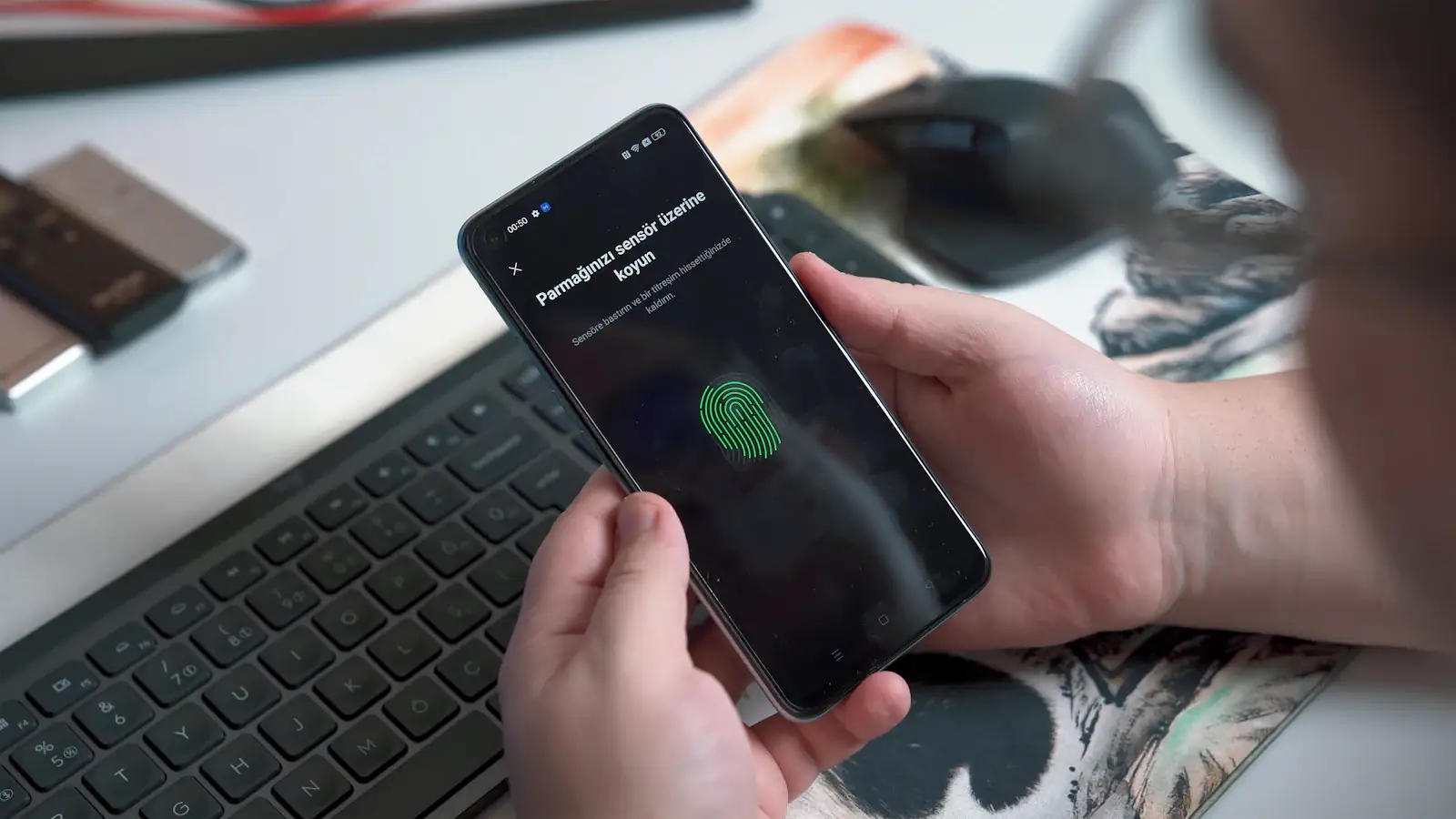
Passkeys replace passwords with a cryptographic key stored on the phone and released by a fingerprint or face scan. The FIDO Alliance reported more than 3 billion passkeys in use in October 2025, with a 93% sign-in success rate and login times down 73%, according to Mobile ID World. A newer FIDO summary on its site cites 5 billion. Wallets that use passkeys to sign transactions give users the same experience as opening a banking app, with no seed phrase to write down.
Self-custody did not stall because people distrust banks less than we thought. It stalled because the seed phrase asked too much.
Five ways to hold your own keys
| Model | How you sign | Recovery | Main risk | Who uses it |
|---|---|---|---|---|
| Seed phrase wallet | One private key from 12 or 24 words | Only with the phrase | Phishing, lost phrase | Most existing users |
| MPC wallet | Key split into shares across devices or a provider | Provider-assisted share refresh | Dependence on provider uptime | Exchanges, fintech apps, institutions |
| Smart account | On-chain rules, one or more signers | Guardians, key rotation | Contract bugs, interface compromise | Treasuries, DAOs, power users |
| EIP-7702 upgraded wallet | Existing key plus delegated smart logic | Depends on delegate contract | Malicious delegation prompts | New feature in mainstream wallets |
| Passkey wallet | Device biometric key | Cloud passkey sync or backup signer | Account lockout, cloud dependency | New consumer wallets |
A worked example: what the averages say
Raw totals hide a lot, so divide them. These calculations use only the published figures above.
- Average Safe account balance. $35.25 billion across 61.11 million accounts is about $577 per account. The median is surely far lower, since a few treasury accounts hold enormous sums, but it shows that most smart accounts are small, everyday wallets rather than institutional vaults.
- Stablecoins in Safe. Around 2% of a stablecoin market Safe put at $340 billion is roughly $6.8 billion, about a fifth of everything Safe accounts secure.
- Average theft from individuals. Chainalysis counted $713 million stolen from personal wallets in 2025 across at least 80,000 unique victims. That is about $8,900 per victim, a serious loss for a family keeping remittance savings on a phone.
The last figure is the one that should shape product design. A self-custody wallet that holds a few hundred dollars for daily spending is a convenience. One that holds a family's savings needs recovery and limits that the seed phrase model never offered.
- 30M MAUMetaMask passes 30 million monthly users
- 15M MAUPhantom raises at $3B with 15M monthly users
- EIP-7702Pectra lets ordinary wallets add smart features
- 3B passkeysFIDO reports 3 billion passkeys in use
- Safe record852,000 new Safe accounts in one month
The security ledger
Chainalysis put total crypto stolen in 2025 at more than $3.4 billion, with the $1.5 billion Bybit hack alone making up about 44%, according to The Block. Attacks on individuals tell a different story. There were 158,000 personal wallet compromises in 2025. The dollar value stolen from individuals fell to $713 million from $1.5 billion the year before, but the number of incidents rose, which suggests attackers are going after more people for smaller sums.
Two lessons follow. First, self-custody shifts risk from a company to the user, and attackers have adjusted. Address poisoning, fake airdrop sites and malicious approval requests are now routine; our guide to money transfer scams covers the common patterns. Second, the biggest losses still come from key management failures rather than clever code exploits: Chainalysis found that private key breaches at centralised services accounted for 88% of stolen amounts in the first quarter of 2025. Smart accounts and MPC reduce single points of failure, but the weakest point is often the screen where a human clicks approve.
This article is general information, not financial or security advice. Anyone holding meaningful sums in self-custody should research recovery options carefully and consider professional guidance.
What this means for payments
For cross-border money, the shift matters more than the headline adoption numbers suggest. A sender who can receive dollar stablecoins into a wallet secured by a phone's face scan, with a relative set as a recovery guardian, has something close to a global bank account with no minimum balance. The friction that remains is at the edges: buying the stablecoin, and turning it back into local money to pay rent or school fees. That is where cards and local payout rails come in, and where regulators focus.
Expect consolidation. As passkeys and smart accounts become the default, the visible difference between a self-custody wallet and a fintech app will narrow. The difference that remains is legal: who can freeze the funds, and who is liable when something goes wrong.
What to watch next
- Safe's Q3 2026 report, expected late October 2026. Its Q1 report landed on 23 April; a similar schedule would show whether March's record account growth held through the summer.
- FIDO Alliance's annual passkey update, around October 2026. Last year's index came on 14 October. The key question is how many crypto wallets now count among passkey adopters.
- Chainalysis crypto crime update, December 2026. Watch whether personal wallet compromises keep rising in count while falling in value per victim.
- EIP-7702 support in mainstream wallets through 2026. As more wallets expose smart features by default, look for both adoption counts and reports of malicious delegations.
Self-custody is no longer a niche for the technically confident. It is becoming a phone feature. Whether that makes ordinary users safer or simply gives scammers a larger target depends on how quickly recovery and spending limits become the default rather than an advanced setting.
Frequently asked questions
How many people use self-custody crypto wallets in 2026?
There is no single count, but a16z estimates 716 million crypto owners and only 40 to 70 million active users, most of whom also use exchanges. Individual providers report tens of millions of accounts each, with overlap.
Which country has the highest crypto adoption in 2025?
India ranked first in Chainalysis's 2025 Global Crypto Adoption Index, with the United States second, and Asia-Pacific was the fastest growing region at 69% growth in on-chain value received.
Can I use a crypto wallet without a seed phrase?
Yes. Smart account and passkey-based wallets let you sign with your phone's biometrics and recover through guardians or backup signers, though each model brings its own dependency risks.
How much crypto was stolen from personal wallets in 2025?
Chainalysis counted $713 million stolen across 158,000 personal wallet compromises affecting at least 80,000 victims, down in value from $1.5 billion in 2024 but up in number of incidents.
Sources and further reading
- a16z State of Crypto 2025 summary (BitPinas)
- India leads global crypto adoption, APAC fastest growing: Chainalysis (The Block)
- Safe Q1 2026 quarterly report (Safe Ecosystem Foundation)
- Smart wallet adoption after Pectra (The Block)
- FIDO Alliance reports 3 billion passkeys in use (Mobile ID World)
- Passkey Index 2025 (FIDO Alliance)
- Crypto hacks hit $3.4 billion in 2025: Chainalysis (The Block)
- Phantom raises $150 million at $3 billion valuation (The Block)
- ConsenSys raises $450M as MetaMask passes 30M MAUs (Business Wire)
This article is for general information and is not financial, legal or tax advice. Figures are as reported by the sources above at the time of writing.