Women and Remittances: Who Sends, Who Receives, Who Decides
Women send about half of global remittances and receive most of them. What the data says on amounts, fees, control of the money and the gender account gap.

Key takeaways
- Women are roughly half of the world's remittance senders and, in most surveyed countries, the majority of recipients, but few providers or regulators publish data by sex.
- Because women tend to send smaller amounts more often, fixed fees take a bigger bite, with one estimate putting their fee burden relative to income more than 20 percent higher than men's.
- Evidence from El Salvador, Egypt and Kenya shows that who controls the money changes how much is saved and what it is spent on.
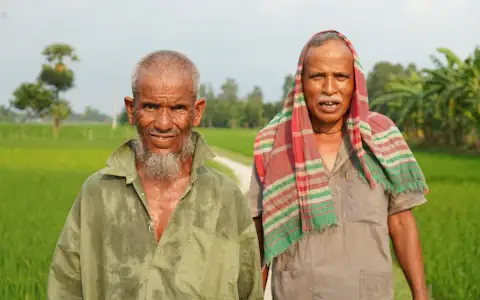
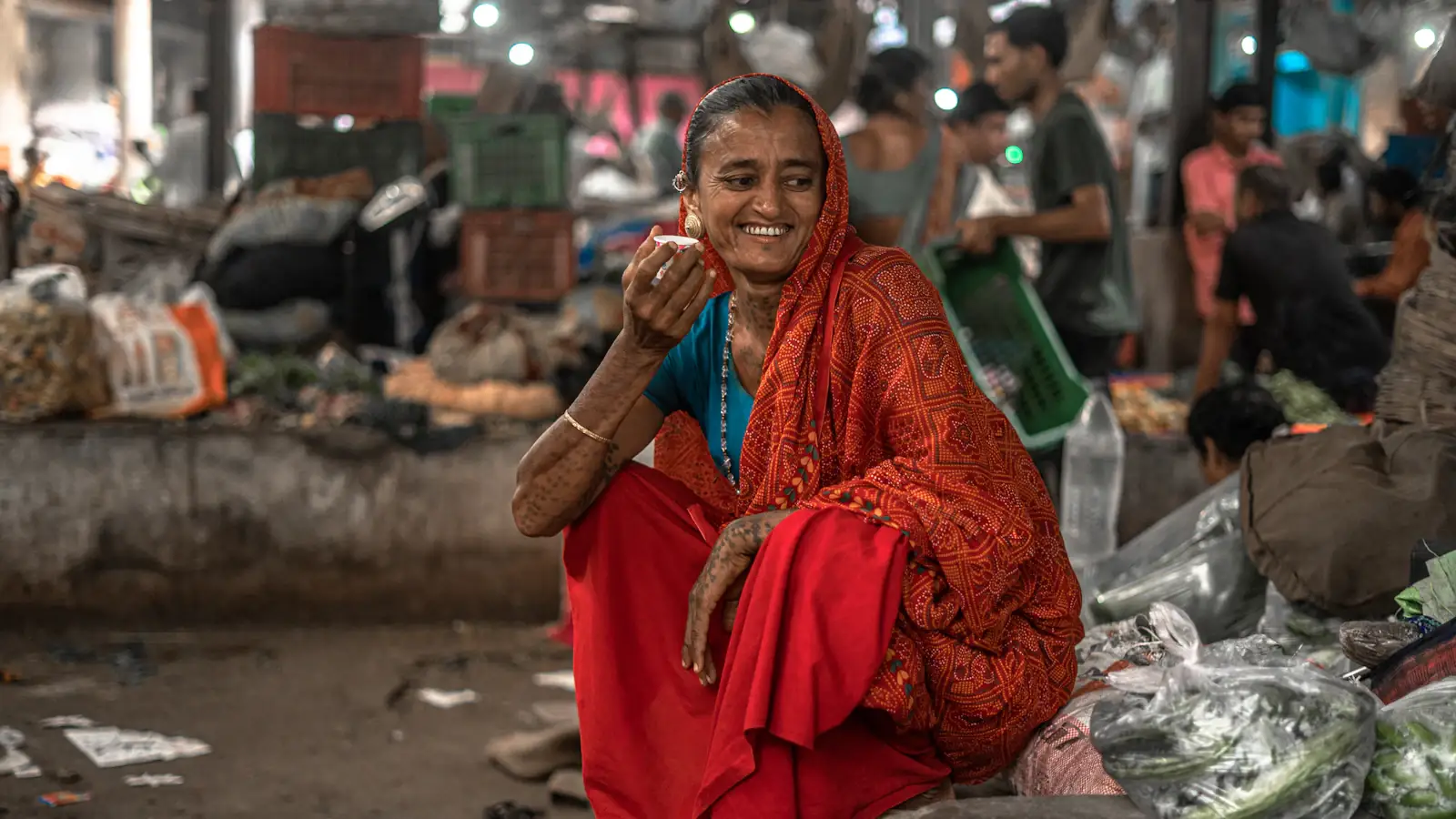
In the Philippines' 2024 count of workers abroad, 57.2 percent were women. Most of them work in what statisticians call elementary occupations: cleaning, caring, cooking in someone else's house. On the other side of the transfer, in a village outside Pokhara or a town in Guatemala's highlands, the person collecting the money is usually a woman too. Remittances are, to a degree the industry rarely acknowledges, a flow from women to women. And the rules, products and fees around them were mostly designed with someone else in mind.
This article pulls together what the data from IFAD, UN Women, the World Bank, IOM and national statistics offices actually says about women as senders and receivers, where that data is weak, and what changes when women control the money.
The headline numbers, and how solid they are
The figure most often quoted comes from IFAD's family remittances campaign: women migrant workers are about half of all remittance senders, roughly 100 million people, and they send about the same amounts as men despite earning less. UNFPA put the female share of international migrants at 49.2 percent back in 2011, and it has hovered near half since.
Those are reasonable estimates. But readers should know how thin the underlying evidence is. A UN Women policy brief that combed household surveys across 11 countries, from Senegal to Nepal to India, relied on data collected between 2003 and 2015, and its authors warned the sample was not representative. Most countries do not publish remittance data by the sender's sex at all. Banks and money transfer companies know exactly who sends what, and almost none of them publish it.
That gap matters because policy follows data. If a central bank cannot see that women pay more per dollar sent, it will not design rules to fix it.
Women send more of less
The claim that women send "a larger share of their income" is repeated so often it has become folklore. The evidence is more mixed than that.
- A study of migrants in Italy by the research centre CeSPI, summarised by the mobile industry body GSMA, found women earned 24 percent less than men on average and sent an average of 425 euros against men's 469 euros. As a share of monthly income, women sent about 12 percent and men about 13 percent.
- Manuel Orozco's 2004 survey of Latin American senders, presented to the UN Commission on the Status of Women, found women remitting about 16 percent of income against 20 percent for men.
- The UN Women brief found that in Burkina Faso, Kenya, Nigeria, Uganda and Nepal, women's average remittances matched or exceeded men's in at least one channel, even though women earn less.
So the honest summary is this. Women's remittances are close to men's in absolute terms, which given lower earnings means a large and often similar share of income. Whether that share is higher depends on the country, the job and the survey. What is consistent across studies is the pattern: women send smaller amounts, more often, for longer.
Source GSMA, citing IOM/UN-INSTRAW 2007 and UNCDF 2017, 2019
Women receive most of the money
On the receiving end the picture is clearer. Orozco's Latin America work found about two-thirds of recipients were women. Later studies collected by GSMA show the same tilt elsewhere.
| Country or region | Women as share of recipients | Source and year |
|---|---|---|
| Colombia | 70% | IOM and UN-INSTRAW, 2007 |
| Guatemala (main recipients) | 63% | IOM and UN-INSTRAW, 2007 |
| Cambodia, Lao PDR, Myanmar | 60% (75% of them rural) | UNCDF, 2017 |
| Nepal | 58% | UNCDF, 2019 |
| Latin America (regional survey) | About two-thirds | Orozco, 2004 survey |
Guatemala is the sharpest illustration. In the same 2007 IOM survey, men were 74.2 percent of senders and women 63 percent of main recipients, according to an IOM information sheet. The classic remittance household is a man abroad and a woman at home running the budget. Increasingly, as in the Philippines, it is a woman abroad and a grandmother or sister at home caring for her children. Our piece on Philippine remittances and OFWs covers that corridor in detail.
The fee penalty for sending small amounts
Smaller, more frequent transfers are expensive. Most remittance prices combine a fixed fee with an exchange rate margin, and the fixed part weighs heaviest on small sends. Orozco estimated in 2017 that, relative to income, women may pay more than 20 percent more in fees than men, as GSMA reports.
Worked example. GSMA cites an average remittance of about $500 and an average mobile money remittance of about $80. Imagine a transfer service that charges a flat $5 fee plus a 1 percent exchange margin (an illustrative price, not any specific provider's).
- A single $500 transfer costs $5 plus $5 in margin, or $10. That is 2 percent.
- Sending the same $500 as six transfers of about $83 costs six flat fees ($30) plus $5 in margin, or $35. That is 7 percent.
The second sender pays three and a half times as much to move the same money. She is not making a mistake. She sends small amounts because she is paid weekly, because her employer holds her wages, or because she wants her family to receive steady sums rather than a lump that someone else might spend. The World Bank's global average cost of sending $200 was 6.36 percent in Q3 2025, still more than double the 3 percent target in the Sustainable Development Goals. For the woman sending $80 at a time, the effective price is often worse. Our guide to the cost of sending money home in 2026 breaks down corridor prices.
What changes when women control the money
Here the research is more striking. Three findings stand out.
Control changes saving behaviour. In a field experiment with 898 Salvadoran migrants in Washington, DC, economists Nava Ashraf, Diego Aycinena, Claudia Martinez and Dean Yang offered different kinds of savings accounts in El Salvador. According to J-PAL's summary, an account in the recipient's name raised account opening by 16.4 percentage points; a joint account by 21.4 points; an account the migrant controlled alone by 34 points. Offering joint or sole control roughly doubled total household savings from a base of about $430. The lesson for designers: who holds the key to the money changes how much money there is.
Women at home often gain decision power, but not always. An IOM study in Egypt found that in about two-thirds of households with a male migrant, women became household heads; half of those women decided alone how remittances were spent and 36 percent decided jointly with their husbands. In Angola, by contrast, male heads usually made the decisions even though 84 percent said women should always be consulted.
Money in women's hands is spent differently. UN Women research reported by GSMA finds women recipients put more toward health care, food, shelter and education. In Kenya, the economists Tavneet Suri and William Jack found mobile money access raised daily per-capita consumption by 2 percent, with female-headed households gaining twice as much as male-headed ones. We look at spending in more detail in what remittances actually pay for.
The person who receives a remittance is not always the person who decides what it buys. Products that ignore that difference miss half the story.
Accounts, phones and the gaps that remain
Financial inclusion has improved fast. The World Bank's Global Findex 2025 found 73 percent of women in low- and middle-income economies had an account in 2024, up 7 points from 2021, and 58 percent made or received a digital payment. About 60 percent of women who opened an account did so to receive a payment from a government or employer, which is a reminder that the first transfer matters. Around 80 percent of women in developing economies own a mobile phone.
But roughly 700 million women still lack an account, and in Sub-Saharan Africa women are 12 percentage points less likely than men to have one. India's experience with Jan Dhan accounts shows both sides: mass account opening is achievable, and using those accounts takes much longer. Our explainer on Jan Dhan and financial inclusion data looks at that gap, and our piece on M-Pesa and mobile money in Africa covers the channel that has done most to close it.
Migrant women face a specific problem on the sending side too. The UN Women brief notes that women are about 73.4 percent of the world's migrant domestic workers, around 8.5 million people. In the UAE, housekeepers and nannies are among the 14 domestic categories for which salary payment through the Wage Protection System is still optional, as we explain in our guide to Gulf wage protection and payroll cards. A worker paid in cash by the household she lives in has no payroll record, no card and often no easy way to reach a remittance counter on her own. An IOM project in Malaysia found 20 percent of Indonesian women workers said their employer, agent or a sibling sent money for them, against almost no men.
What to watch next
- December 2026: the Philippine Statistics Authority's results for its 2025 survey of overseas Filipinos are due around the end of the year, following the December 2025 release for 2024. Watch whether women's share, 57.2 percent last time, keeps rising.
- End of 2027: the G20's targets for cheaper, faster cross-border payments fall due. Regulators who want to hit them will have to deal with the small-transfer pricing that hits women hardest.
- 16 June 2027: the next International Day of Family Remittances. A useful test of progress would be whether any major remittance provider or central bank finally publishes sender data by sex.
- Gulf domestic work rules: any move by the UAE to make WPS mandatory for housekeepers and nannies would bring the most excluded women senders into the formal system.
The direction is clear even where the numbers are fuzzy. Women are half the senders and most of the receivers. They send smaller amounts, pay more for it, and spend the money on the things that build a household. Pricing, product design and regulation built around the average male sender are leaving money on the table, mostly women's money.
Frequently asked questions
Do women send more remittances than men?
Women send roughly the same amounts as men in absolute terms despite earning less, according to IFAD. Whether they send a higher share of income varies by study: a CeSPI study in Italy found 12 percent for women against 13 percent for men.
What share of remittance recipients are women?
Surveys find women are the majority of recipients in most countries studied, including 70 percent in Colombia, 63 percent of main recipients in Guatemala and 58 percent in Nepal.
Why do women pay more to send remittances?
Women more often send small, frequent transfers, and fixed fees make up a larger share of a small transfer. Manuel Orozco estimated that relative to income, women may pay more than 20 percent more in fees than men.
How many overseas Filipino workers are women?
The Philippine Statistics Authority found women made up 57.2 percent of an estimated 2.19 million overseas Filipino workers in 2024, and most women OFWs work in elementary occupations such as domestic work.
Sources and further reading
- IFAD Family Remittances, Achieve gender equality
- UNFPA, Highlighting importance of women migrants' remittances
- UN Women, Migrant women and remittances: exploring the data
- GSMA, Enabling international money transfers for women
- Manuel Orozco, statement to the UN Commission on the Status of Women
- IOM, Gender, migration and remittances information sheet
- J-PAL, Savings in transnational households
- World Bank, Global Findex 2025 on women's accounts
- Inquirer, PSA: OFWs increase by 1.5% in 2024
- PSA, 2023 Overseas Filipino Workers final results
This article is for general information and is not financial, legal or tax advice. Figures are as reported by the sources above at the time of writing.