



Forex Travel Card vs Multi-Currency Account vs Crypto Card (2026)
Forex travel cards, multi-currency accounts and crypto cards compared on FX markup, GST, TCS, ATM costs, DCC traps and what protects your money in 2026.


Key takeaways
- For a traveller starting in rupees, a forex card usually costs a fraction of a credit card with a 3.5% markup, which becomes 4.13% after GST.
- Crypto cards are cheapest for people already holding stablecoins, but converting rupees into tokens just to spend abroad adds a second spread and VDA tax friction.
- E-money balances in multi-currency accounts are safeguarded rather than deposit-insured, and UK customers of failed payment firms lost 65% on average between 2018 and 2023.
A textile buyer from Surat lands in Milan with three pieces of plastic in her wallet: a bank-issued forex card loaded with euros, a credit card with a 3.5% foreign currency markup, and a crypto card a cousin in Dubai talked her into. Each will happily pay for her espresso. The difference between them on a ten-day trip can be the price of a return train to Florence, and most of it is hidden inside exchange rates rather than printed as a fee.
This piece compares the three ways people now carry money abroad: prepaid forex travel cards, multi-currency accounts with a linked debit card, and crypto cards that spend stablecoins or other tokens through Visa or Mastercard. We look at where the cost sits, what taxes apply for Indian residents, what protects the balance if the provider fails, and when each one actually makes sense.
Three products that look the same at the till
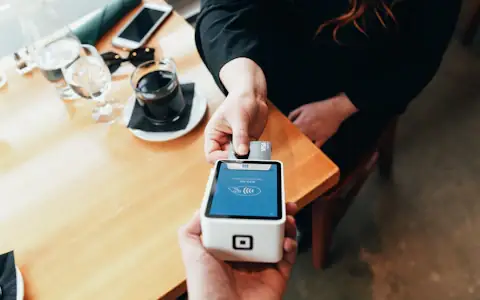
At a card terminal in Lisbon or Bangkok, all three products behave identically. The merchant sees a Visa or Mastercard transaction in local currency and gets paid in local currency. What differs is what happens behind the scenes before and after that tap.
- Forex travel card. A prepaid card you load in advance, usually from an Indian bank or authorised dealer, in one or several currencies. The exchange rate is locked at load time. You pay the provider's card rate, which includes a spread over the interbank rate, plus GST on the conversion.
- Multi-currency account. An e-money or bank account that holds balances in several currencies, with a debit card attached. You convert when you choose, often at or near the mid-market rate with a disclosed fee, or let the card convert automatically at the moment you spend.
- Crypto card. A debit or prepaid card where the funding source is a crypto balance, very often a dollar stablecoin. At the moment you pay, the issuer sells or debits the token and the network settles the merchant in local currency. We explained the plumbing in our guide to how crypto cards work.
The crypto card is the newest and the fastest growing. Card spending funded by crypto reached roughly $1.5 billion a month by late 2025, an annualised pace above $18 billion, according to Artemis data reported by The Defiant. Analysts cited by Cointelegraph in May 2026 put Visa's share of that activity at around 90%. That is real money, but it is still tiny next to traditional travel spending.
Where the cost actually hides
Travel money has four cost layers, and providers compete by making one of them look free while charging on another.
The exchange rate spread
Every product converts at some rate. The fairest benchmark is the mid-market rate, the midpoint between buy and sell prices on the interbank market. Indian credit cards typically add a markup of between 1% and 3.5% on foreign currency spending, with several large issuers sitting at the top of that range, according to a tracker of issuer schedules at CardTrail. Forex cards bury their margin in the card rate quoted at load. Multi-currency accounts tend to show the fee separately, which is why they often look cheaper even when the gap is small. If the idea of a "zero fee" transfer sounds too good, our explainer on the mid-market rate shows how to check.
Taxes on the conversion
In India, GST is charged at 18% on the markup when you spend in foreign currency on a card. So a 3.5% markup becomes about 4.13%. When you buy foreign currency or load a forex card, GST applies instead to a deemed "value of supply" under Rule 32(2)(b) of the CGST Rules: 1% of the amount up to Rs 1 lakh (minimum Rs 250), then Rs 1,000 plus 0.5% of the amount between Rs 1 lakh and Rs 10 lakh, as laid out by ClearTax. GST at 18% is then charged on that value. On a Rs 2 lakh load, that works out to Rs 270 of GST, which is much smaller than the markup GST on a credit card.
Tax collected at source
Loading a forex card is a remittance under the Liberalised Remittance Scheme, so TCS can apply. Since April 2025 the general threshold is Rs 10 lakh per financial year. Budget 2026-27 cut TCS on overseas tour packages to a flat 2% and on LRS education and medical remittances to 2%, as Outlook Money reported in February 2026. For most other purposes, including personal travel loads, TCS kicks in above the Rs 10 lakh threshold at a higher rate. TCS is not an extra tax; it is credited against your final liability. But it ties up cash, and a family planning a long trip should factor it in and check the current rate with their bank or tax adviser.
Fees around the edges
ATM withdrawals, inactivity charges, reload fees, cross-currency fees when you spend a currency you did not load, and charges for cashing out the leftover balance on return. These are small individually and decisive in aggregate. A forex card loaded only with euros, used in Switzerland, may convert twice.
Source Illustrative, using CGST Rule 32(2)(b) slabs and 18% GST
The DCC trap that beats every card
The single most expensive mistake is not the card. It is the terminal asking whether you want to pay "in rupees" or "in pounds" instead of the local currency. This is dynamic currency conversion, and the merchant's acquirer sets the rate. One study cited by CNN Travel found an average DCC charge of 7.6%, more than double the usual cost of letting your own card convert. The rule is simple: always choose the local currency. It applies to forex cards, multi-currency accounts and crypto cards alike.
The card you carry matters less than one tap on a terminal screen: always pay in the local currency.
Europe forces transparency here. The EU's cross-border payments regulation requires card providers to show currency conversion charges as a percentage markup over the ECB's euro reference rate, and to send an electronic message after a foreign-currency card payment or withdrawal, rules that took full effect for cards in April 2021, as Addleshaw Goddard summarised. India has no equivalent requirement for a post-transaction markup alert.
Side-by-side comparison
| Feature | Forex travel card | Multi-currency account | Crypto card |
|---|---|---|---|
| Rate set | At load, locked | At conversion or at spend | At spend, from token to local currency |
| Typical visible fee | Spread inside card rate | Disclosed conversion fee | Conversion fee or spread, sometimes network fees on top-up |
| Indian GST | Slab on value of supply | Depends on provider location | Depends on provider location |
| LRS and TCS | Yes, load is a remittance | Yes when funded from India | Yes when funded from India, plus VDA tax rules |
| Rate risk | None after load | Low if pre-converted | Low for stablecoins, high for volatile tokens |
| Balance protection | Issuing bank | Safeguarding, not deposit insurance, for e-money | Varies widely; custodial risk |
| Chargebacks | Network rules apply | Network rules apply | Network rules apply on the card leg only |
| Best fit | Fixed-budget trips | Frequent travellers, multiple currencies | People already earning or holding stablecoins |
A worked example: Rs 2 lakh in Europe
Take the Surat buyer's ten days in Italy, spending the equivalent of Rs 2,00,000 in euros. For round numbers, assume a mid-market rate of Rs 100 per euro, so the trip is EUR 2,000. These are illustrations with stated assumptions, not quotes from any provider.
- Credit card at a 3.5% markup. Markup: Rs 7,000. GST at 18% on that: Rs 1,260. Total cost over mid-market: Rs 8,260, or 4.13%.
- Forex card with a 1% load spread. Spread: Rs 2,000. GST value of supply: Rs 1,000 plus 0.5% of the Rs 1 lakh above the first lakh, so Rs 1,500; 18% of that is Rs 270. Total: Rs 2,270, or about 1.1%. Unspent euros brought home cost another spread when converted back.
- Crypto card funded with dollar stablecoins. Assume a 1% spread buying the stablecoin and a 1% conversion fee at the card. Total: roughly Rs 4,000, before any network fees to move tokens, and before tax. For an Indian resident, transfers of virtual digital assets attract 1% TDS and gains are taxed at 30%, under rules set out by the Income Tax Department. The TDS is creditable, but it adds friction.
The forex card wins this particular trip, by a wide margin over the credit card. The crypto card is not the cheapest route for someone starting with rupees, because the money has to be converted twice. It looks very different for a freelancer in Bali who is already paid in USDC: for her, the stablecoin is the starting point and the card is the cheapest way out. That is the case we explored in crypto cards for travellers and freelancers.
- EU disclosureCard FX markup shown against ECB reference rate
- EU alertsPost-transaction FX charge messages begin
- India TCSLRS TCS threshold raised to Rs 10 lakh
- India TCS cut2% TCS on tour packages, education, medical
- UK safeguardingFCA tougher safeguarding rules take effect
What protects your balance
Cost is only half the comparison. The other half is what happens if the company holding your money fails.
A forex card issued by an Indian bank is a liability of that bank. A multi-currency account from a payments firm is usually e-money, and that is a different animal. In the UK, the FCA states plainly that funds held by payments and e-money firms are not covered by the Financial Services Compensation Scheme. Instead the firm must safeguard customer funds in segregated accounts. That system has failed before: customers of payment firms that collapsed between 2018 and 2023 lost an average of 65% of their money, according to FCA figures reported by FinTech Global. Tougher rules, with monthly reporting and daily checks that enough money is set aside, took effect in May 2026.
Crypto cards sit further out on the risk curve. Most hold your tokens in a custodial account run by the card programme or an exchange. Some newer cards spend directly from a self-custody wallet, which removes the custodian but puts recovery entirely on you. Our piece on self-custody versus custodial wallets covers that trade-off. Card network chargeback rights still apply to the card transaction itself, but they do not protect the token balance behind it.
Which one fits which traveller
There is no universally cheapest card, only the cheapest for a given starting currency and trip pattern.
- A family on a fixed-budget holiday from India. A forex card loaded in the destination currency gives rate certainty and modest costs. Bring back as little as possible.
- A frequent business traveller crossing several currencies. A multi-currency account avoids locking money into one currency in advance, and transparent fees make it easy to audit. Check where the provider is regulated and whether balances are e-money.
- A remote worker paid in stablecoins. A crypto card avoids converting to a home currency first. Tax treatment on each spend can be a disposal in several countries, so keep records. Our guide to crypto tax by country sets out the rules.
- Everyone. Keep a backup card on a different network, refuse DCC every time, and avoid withdrawing small amounts of cash repeatedly.
This is general information, not financial or tax advice. Fees and tax rules change; confirm current terms with your provider and a qualified adviser before you travel.
What to watch next
- Visa's stablecoin card push. Visa and Stripe-owned Bridge announced stablecoin-linked cards across more than 100 countries, starting with markets in Latin America, with Asia-Pacific, Africa and the Middle East slated for expansion by the end of 2026. Wider availability will bring crypto cards to many more travellers.
- India's Budget 2027-28, February 2027. TCS rules on LRS have been rewritten repeatedly since 2023. Watch for further moves on the Rs 10 lakh threshold.
- UK safeguarding reform. The FCA's interim rules took effect in May 2026, with a statutory trust floated by the regulator as the longer-term end state. If adopted, it would change what e-money customers can expect in an insolvency.
- India's crypto framework. Any move from tax-only treatment to a licensing regime would affect which crypto cards Indian residents can lawfully use. We track it in India crypto regulation 2026.
The plastic all looks the same. The money behind it does not. For someone starting in rupees, the boring forex card still beats the shiny alternatives on cost; for someone already holding digital dollars, the crypto card is the shortest path to a cafe bill. Know which of those you are before you pack.
Frequently asked questions
Is a forex card cheaper than a credit card for international travel from India?
Usually yes. A credit card markup of 3.5% plus 18% GST costs about 4.13%, while a forex card's load spread plus slab-based GST often comes to around 1% to 1.5%, though rates vary by provider.
Does TCS apply when I load a forex card in 2026?
Loading a forex card is an LRS remittance. TCS generally applies only above Rs 10 lakh per financial year for personal travel, while overseas tour packages attract a flat 2% from April 2026; check the current rate with your bank.
Are crypto cards good for travel abroad?
They work at any Visa or Mastercard terminal, and suit people already holding stablecoins. For someone converting rupees or pounds into crypto first, the double conversion and tax treatment often make them costlier than a forex card.
Should I pay in local currency or my home currency when abroad?
Pay in the local currency. Choosing your home currency triggers dynamic currency conversion, which one study found costs an average of 7.6%.
Sources and further reading
- Crypto Cards Rival Stablecoin Transfers as Spending Tops $18 Billion: Artemis (The Defiant)
- Crypto card monthly volume surges 230% in one year (Cointelegraph)
- Forex markup on credit cards in India (CardTrail)
- GST on foreign exchange (ClearTax)
- Budget 2026: how the TCS cut changes the math for foreign travel (Outlook Money)
- Cross-border payments: cards on tour (Addleshaw Goddard)
- Should you pay in local or home currency abroad (CNN Travel)
- Proposed new rules to better protect customers of payments firms (FCA)
- FCA introduces new rules to safeguard client funds (FinTech Global)
- Taxation of Virtual Digital Assets (Income Tax Department)
This article is for general information and is not financial, legal or tax advice. Figures are as reported by the sources above at the time of writing.