Paying the Government Online in India: Taxes, Fees and e-Challans
How Indians pay property tax, GST, utility bills and traffic e-challans online, why Rs 23,000 crore in fines sits unpaid, and what the data shows in 2026.

Key takeaways
- Only about 53% of the Rs 49,194 crore in e-challans issued nationwide has been recovered, which is why the Supreme Court tied unpaid fines to vehicle services in September 2026.
- Property tax shows digital collection working at scale, with Pune taking about two-thirds of Q1 2026-27 collections online, though larger bills still arrive by cheque.
- Shared rails such as Bharat Connect and GOV.UK Pay spread quickly at the centre but slowly at the local level, where most citizen bills originate.
On 28 September 2026, two judges of the Supreme Court of India read out a number that most citizens never see on their phones: Rs 49,194.05 crore in traffic fines issued through e-challans across the country, of which only Rs 26,175.05 crore had been recovered. Roughly Rs 23,000 crore was simply sitting there, owed to the state and unpaid. The bench responded by ordering that vehicles with unpaid challans can be impounded and that their owners can be locked out of registration, fitness and licence services until they clear their dues.
That order is a useful lens on a part of payments that gets far less attention than remittances or stablecoins: the money citizens send to their own government. Property tax, water charges, GST, court fees, passport fees, traffic fines. India has built excellent rails for collecting this money. What it has not fully built is the habit, or the enforcement, that makes people use them. This piece looks at where digital government collections work, where they leak, and why the hardest problem is no longer the payment button.
The collection gap that technology did not close
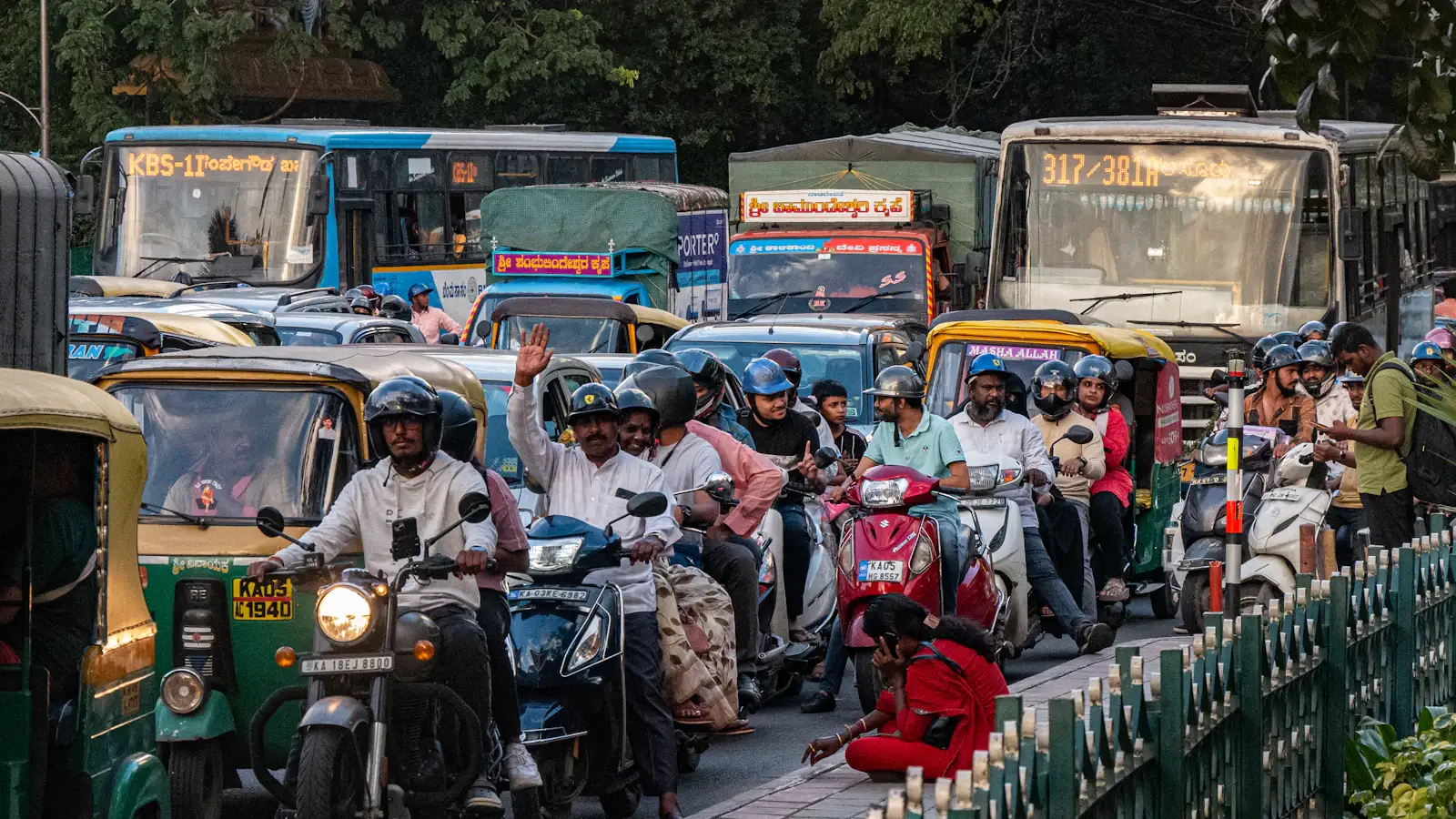
The e-challan system is a triumph of digitisation on the issuing side. Cameras and handheld devices generate fines, the record lands on the national Parivahan back end, and a vehicle owner can pay with UPI, a card or net banking in under a minute. Yet according to the figures placed before the court and reported by LiveLaw, the recovery rate works out to about 53%. Almost half the value of fines issued has not come in.
Even government departments are part of the problem. A report summarised by Angel One noted that government vehicles in Karnataka had racked up 82,208 traffic violations over three and a half years, with Rs 19.24 crore in unpaid fines, and 3,366 of those violations involved police vehicles. When the state does not pay the state, it is hard to argue that the missing ingredient is a better checkout page.
Our view: the court has correctly identified that friction at the point of payment is not the bottleneck. The bottleneck is the absence of consequence. Digital payment rails reduce the cost of complying, but they do nothing about the cost of not complying. The September order changes that second number by tying fines to services people actually need, such as renewing a registration certificate or transferring ownership.
What the order actually requires
The directions are worth listing because they turn a payments question into an identity and records question. The court asked authorities to impound vehicles found with unpaid challans during random checks, freeze vehicle-related online services until dues are cleared, refuse fitness and pollution certificates, block ownership transfers by flagging vehicles on the Parivahan portal, and suspend licences for repeat violators. It also asked the transport ministry to publish a monthly public dashboard under Section 136A of the Motor Vehicles Act and to examine a national road safety system linking VAHAN, SARATHI, e-Challan and accident databases.
Notice what this does. It converts an unsecured fine into something closer to a lien on a digital record. The same logic is already familiar from FASTag, where a toll is deducted before the boom barrier lifts. It is also the logic that makes property tax collections in well-run cities so high: you cannot sell or mortgage a flat cleanly with arrears on the municipal record.
A payment rail lowers the cost of paying. Only a linked record raises the cost of not paying.
Property tax: the quiet success story
If traffic fines show the gap, municipal property tax shows how far digital collection can go when the habit is in place. Pune Municipal Corporation collected Rs 1,395.86 crore in the first quarter of 2026-27 from 7,40,282 property owners, up from Rs 1,292.94 crore a year earlier, according to Punekar News. Of that, Rs 927.02 crore came online from 5,41,500 owners. Cheques and demand drafts brought Rs 354.46 crore and cash Rs 114.38 crore.
Navi Mumbai tells a similar story. Its civic body recorded Rs 876 crore in property tax in 2025-26, its highest ever, from 2,25,576 property owners, with about 61% paying online, as reported by the Free Press Journal. It also ran an amnesty in March that waived half of late payment penalties, which tells you something about what moves the laggards: a deadline and a discount, not a new app.
Worked example: who still pays by cheque
The Pune numbers let us do a small piece of arithmetic that the headline figures hide. Online, Rs 927.02 crore came from 5,41,500 owners, an average of about Rs 17,100 per owner. Offline, the remaining 1,98,782 owners paid Rs 468.84 crore through cheques, drafts and cash, an average of roughly Rs 23,600 each.
So by count, about 73% of Pune's paying owners went digital in the quarter. By value, only about 66% of rupees did. The offline group pays larger bills on average, which points to commercial properties, institutions and older owners writing cheques for big assessments. That matters for any city chasing a "100% digital" target. The last third of value is concentrated in a smaller group with larger, often more complicated bills, and it will not move because someone adds another QR code to the counter. It moves when the assessment, the dispute process and the receipt are all online too.
| Payment type | Main rail or portal | Latest data point | Main friction |
|---|---|---|---|
| Traffic fines | Parivahan e-Challan; UPI, cards, net banking | 53% of Rs 49,194cr recovered (Sep 2026) | No consequence for non-payment, until the court order |
| Property tax | City portals; Bharat Connect municipal billers | Pune: Rs 927cr of Rs 1,396cr online in Q1 2026-27 | Large commercial bills, disputes, assessment errors |
| GST | GST portal challan (PMT-06); net banking, NEFT/RTGS, cards in some states | Rs 2.04 lakh crore gross, Sep 2026 | Card availability and charges vary by state |
| Central non-tax fees | Bharatkosh (Non-Tax Receipt Portal) | Single point for fees and fines across civil ministries | Discoverability; many citizens do not know it exists |
| UK comparison | GOV.UK Pay | Nearly GBP 10bn lifetime, ~1,800 services | Uneven local authority uptake (41%) |
GST: the biggest bill most citizens never see
For businesses, the largest regular payment to government is GST, and here the digital share is effectively total because the system was built online from day one. Gross GST collections reached Rs 2,03,521 crore in September 2026, up 14.7% on a year earlier, with net collections after refunds of Rs 1,76,520 crore, according to provisional figures summarised by A2Z Taxcorp. For April to September, gross collections were Rs 12.46 lakh crore, up 11.6%.
The interesting payments detail is on the edges. Businesses generate a challan on the portal and pay through net banking, NEFT or RTGS, or over the counter for small amounts. From January 2024, GSTN began allowing credit and debit card payments in 10 states and union territories, with any transaction charges added on top of the tax, as noted in a Taxo summary of the GSTN advisory. For a small trader, that charge question is real. A card fee of even one or two percent on a quarterly liability is money that never reaches either the business or the exchequer. Readers working out which method suits them should check current charges with their bank and a tax adviser.
Bharat Connect and the long tail of municipal billers
The other quiet piece of plumbing is Bharat Connect, the interoperable bill payment system formerly known as BBPS. Its public category list shows 111 municipal tax billers, 68 water billers and 98 electricity billers, alongside a striking 20,410 education fee billers, according to the Bharat Connect category page. There is no separate category for traffic challans.
Read that list as a coverage map. India has thousands of urban and rural local bodies. Only a little over a hundred appear as municipal tax billers on the shared network. That means most local taxes are still paid through each body's own portal, a counter, or a payment gateway the city contracted separately. Every one of those is a separate integration, a separate receipt format and a separate reconciliation job for a municipal accounts officer. Getting more local bodies onto a shared biller network would do more for citizen convenience than any number of new apps, because it lets a resident pay from whichever bank or UPI app they already use.
At the central level, the equivalent is Bharatkosh, the Non-Tax Receipt Portal run by the Controller General of Accounts. The CGA describes it as a single online point for depositing fees, fines and other payments into the government account across civil ministries. It is a sensible design that few citizens have heard of.
What the UK learned running one payment layer for government
Britain offers a useful benchmark because it chose a shared platform early. GOV.UK Pay turned ten in September 2026 and has processed nearly GBP 10 billion over its life, according to the Government Digital Service. The first billion took about four years. It now handles that much in roughly five months. Almost 1,800 services across more than 600 organisations use it, including central departments, the NHS and police forces.
The weak spot looks familiar. Only 157 UK local authorities, 41% of the total, use the platform. Councils had their own contracts, their own gateways and their own reasons for staying put. India's version of this problem is larger by an order of magnitude, but the lesson transfers: a shared rail spreads fastest where the centre can mandate it, and slowest at the local level, where most citizen bills actually originate.
Why linking records beats building apps
There is a pattern across all of these examples. Collection rates rise when the payment is tied to something the citizen needs from the state. FASTag works because the barrier will not lift. Property tax works in cities that block transfers with arrears. GST works because input tax credit depends on it. The e-challan system lagged because, until September 2026, an unpaid fine had almost no effect on daily life.
This is also where the risks sit. Linking payment status to licences, registrations and utility connections gives the state a lot of leverage over individuals, and it amplifies the damage from bad data. A wrongly issued challan, a camera error or a fine attached to a sold vehicle becomes a blocked service. The court's direction for a monthly public dashboard is welcome. Equally important is a fast, online dispute channel with deadlines, so that enforcement and correction move at the same speed. The India Stack approach works best when the grievance layer is as well built as the payment layer.
The same rails that collect money also carry it outwards, through direct benefit transfers. A government that can both pay and collect through linked digital records can, in principle, net one against the other. That is a powerful idea and one that deserves careful public debate before anyone tries it.
What to watch next
- Late October 2026: the transport ministry's first steps on the monthly e-challan dashboard ordered by the Supreme Court on 28 September. The key metric is whether the recovery rate climbs from 53%.
- Early November 2026: October GST figures. Watch whether gross collections hold above Rs 2 lakh crore for a fourth straight month.
- Through Q3 2026-27: growth in Bharat Connect's municipal tax biller count from its current 111. Every new local body on the network is one less standalone portal.
- 31 March 2027: the financial year-end rush for property tax, when cities like Pune and Navi Mumbai typically run penalty waivers. Compare their online share against this year's 61% to 66%.
Citizens paying government is the least glamorous corner of payments, and also the one where the rails are most clearly ahead of the institutions. For a wider view of how other countries handle the outgoing side, see our coverage of government-to-person payments.
Frequently asked questions
How much traffic fine money is unpaid in India?
Figures placed before the Supreme Court in September 2026 showed Rs 49,194.05 crore in recoverable e-challans, of which Rs 26,175.05 crore had been recovered, leaving roughly Rs 23,000 crore unpaid.
What happens if I do not pay an e-challan after the Supreme Court order?
The 28 September 2026 order allows authorities to impound vehicles with unpaid challans and to block services such as registration renewal, fitness certificates and ownership transfers until the dues are cleared. Check the latest state-level rules and use the official dispute channel if a challan is wrong.
Can I pay GST with a credit card or UPI?
GSTN began allowing credit and debit card payments in 10 states and union territories from January 2024, with any transaction charges added on top of the tax. Net banking, NEFT and RTGS remain the standard modes; confirm current options and charges on the GST portal or with your bank.
Can I pay municipal property tax through Bharat Connect?
Yes, for local bodies that are registered billers; the Bharat Connect category list shows 111 municipal tax billers. If your city is not listed, you will need to use its own portal or counter.
Sources and further reading
- LiveLaw: Supreme Court orders on unpaid e-challans
- Angel One: India's e-challans amount to Rs 49,194 crore
- Punekar News: PMC Q1 2026-27 property tax collection
- Free Press Journal: NMMC Rs 876 crore property tax in FY26
- A2Z Taxcorp: GST revenue September 2026
- Taxo: GST payable by credit or debit card (GSTN advisory)
- Bharat Connect: biller categories
- Controller General of Accounts: Bharatkosh
- GDS blog: GOV.UK Pay at 10
This article is for general information and is not financial, legal or tax advice. Figures are as reported by the sources above at the time of writing.