What Are Payment Rails? Cards, ACH, RTGS, Instant and Blockchain
A plain-English guide to payment rails: how card networks, ACH, wires, instant systems, mobile money and blockchains move money, with a speed and cost table.


Key takeaways
- A payment rail combines a message format, a settlement method and a rulebook, and each rail trades off speed, cost, reversibility and reach differently.
- Cards and correspondent banking reach the world but cost the most, while instant systems are fast and cheap but mostly limited to one country.
- Most payments innovation today is about linking cheap local rails with a faster bridge in between, whether through linked instant systems or stablecoins.
When you tap a card, send a bank transfer or pay a friend in an app, the button looks the same. Underneath, the money may travel on completely different tracks, each with its own speed, price and rules. Those tracks are called payment rails, and understanding them explains why some payments are free and instant while others take three days and cost $40.
A rail is a set of rules plus a ledger
A payment rail is the system that moves value from one account to another. It has three parts: a messaging format that says who pays whom, a settlement method that actually moves the money between institutions, and a rulebook that covers who can join, what happens if something goes wrong and who pays for it. Different rails make different trade-offs between speed, cost, reversibility and reach.
1. Card networks
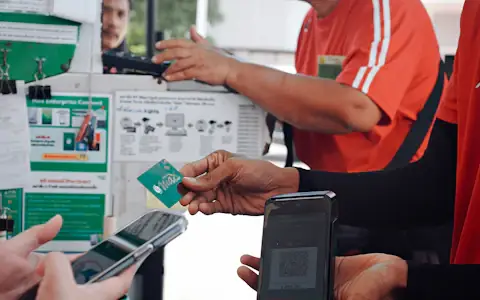
Visa, Mastercard, UnionPay, RuPay and others connect the customer's bank (the issuer) to the merchant's bank (the acquirer). Authorisation takes about a second, which is why cards feel instant. Settlement between banks happens later, usually a day or two. Visa alone processed 257.5 billion transactions in its 2025 fiscal year, according to its earnings release.
Cards are global and protect consumers with chargebacks, but merchants pay for it. US merchants paid $198.25 billion in processing fees in 2025, with an average rate around 1.59% of purchase value, according to the Nilson Report. Rewards points and fraud protection are funded from that.
- Correspondent bankingGlobal reach, highest cost1 to 5 business days
- ACH and batch transfersCents, business days onlySame day to 3 days
- Card networksAbout 1.59% average to US merchantsSeconds to approve, 1 to 2 days to settle
- Instant systems (UPI, Pix, FedNow)Mostly domesticSeconds
- Stablecoins on public blockchainsGlobal, needs on and off rampsSeconds to minutes, 24/7
FasterSlower
Source Nilson Report 2025 card fees; Nacha; Federal Reserve; NPCI; BIS. Bar length shows relative settlement time.
2 and 3. Batch transfers and wires
Automated clearing houses bundle payments into batches and settle them at set times. The US ACH network carried 35.2 billion payments worth $93 trillion in 2025, says Nacha. Payroll, rent, utility direct debits and subscriptions mostly run here. It is cheap, often a few cents per payment, and slow by modern standards: same-day at best, usually one to three days. Europe's standard SEPA credit transfer and the UK's Bacs work on the same principle.
Real-time gross settlement (RTGS). RTGS systems are run by central banks for large, urgent payments between banks. Each payment settles individually and finally in central bank money. The Fed's Fedwire Funds Service handled about 869,000 transfers a day in 2025, worth an average of $4.59 trillion daily, with an average transfer of $5.28 million, according to Federal Reserve data. When you send a domestic wire for a house deposit, this is the rail. It is fast and final but usually closes on weekends, and banks charge retail customers handsomely for access.
4. Instant payment systems
These are the newest bank rails: India's UPI, Brazil's Pix, Europe's SEPA Instant, the UK's Faster Payments, and FedNow and RTP in the US. Payments settle in seconds, 24 hours a day, and are usually irrevocable. Costs to the user are often zero. UPI averaged about 802 million transactions a day in September 2026. Our guides to UPI and FedNow and RTP show how differently they have been adopted.
The limitation is geography. Almost all instant systems work in one currency inside one country or region.
5 and 6. Mobile money and correspondent banking
In much of Africa and parts of Asia, telecom-run wallets such as M-Pesa function as a rail of their own, with agents converting cash to e-money. The GSMA says mobile money processed $2.1 trillion in 2025. It reaches people banks never did, but each system is mostly national.
Correspondent banking. For cross-border payments, banks send messages over SWIFT and settle through accounts they hold with each other, often via one or more intermediaries. It reaches nearly every country but is the most expensive retail option, especially at banks. Our explainer on correspondent banking covers why.
7. Blockchains
Public blockchains such as Ethereum, Solana, Tron and Stellar act as global, always-open ledgers. Moving a dollar stablecoin on them settles in seconds to minutes. Typical USDC transfer costs in mid-2026 were a fraction of a cent on Solana, around a cent on Base and $1 to $5 on Ethereum's main chain, according to Spark's tracker. Total stablecoin supply stood near $306 billion in October 2026, per DefiLlama.
The trade-offs are different: no chargebacks, the user or a provider must manage keys, and converting into and out of local currency still needs a bank or exchange at each end.
There is no best rail. There is only the right rail for a given payment.
The comparison table
| Rail | Typical speed | Typical cost to sender | Hours | Reach |
|---|---|---|---|---|
| Card networks | Seconds to approve, 1-2 days to settle | Free to customer; ~1.59% average to US merchants | 24/7 | Global |
| ACH / batch transfer | Same day to 3 days | Cents | Business days | Domestic |
| RTGS / wire | Minutes | Bank fee, varies by bank | Business hours | Domestic |
| Instant payment system | Seconds | Usually free | 24/7 | Domestic or regional |
| Mobile money | Seconds | Small tiered fees | 24/7 | Mostly domestic |
| Correspondent banking | Hours to days | Highest; bank remittances average well above 10% | Business days | Global |
| Stablecoin on blockchain | Seconds to minutes | Under a cent to a few dollars | 24/7 | Global, needs on/off ramps |
Card figure: Nilson Report, US average for 2025. Wire fees vary by bank. Bank remittance cost reflects the World Bank's Q1 2025 average of 14.55% for sending $200.
Why this matters for ordinary payments
Take a postgraduate student in Melbourne paying a phone bill in India for her parents. If her bank wires rupees, the payment rides correspondent banking with fees at both ends. If a remittance company collects her dollars by debit card and pays out over UPI, two cheaper domestic rails do most of the work, and the company handles the currency swap in the middle. If a provider uses stablecoins for that middle leg, the settlement can happen on a Sunday night.
Most of the innovation in payments today is about stitching rails together: using cheap local rails at each end and finding a faster, cheaper bridge between them. That is the idea behind linked instant systems such as Project Nexus and behind stablecoin settlement. Once you can see the rails, a lot of fintech news starts to make sense.
Frequently asked questions
What is a payment rail?
A payment rail is the infrastructure that moves money between accounts, including the message format, how institutions settle with each other and the rules for participants. Examples include card networks, ACH, wire systems, instant payment systems and blockchains.
What is the cheapest payment rail?
Domestic instant payment systems like UPI and Pix are often free to users, and ACH costs cents. For cross-border payments, stablecoin transfers on low-fee blockchains can cost under a cent, though converting to and from local currency adds costs.
What is the difference between ACH and a wire transfer?
ACH batches many payments and settles them at set times, usually same day to three days, at low cost. A wire uses a real-time gross settlement system, settling each payment individually and quickly, but banks typically charge more for it.
Sources and further reading
- Visa fiscal fourth quarter and full-year 2025 results - SEC filing
- Merchant processing fees - The Nilson Report
- Fedwire Funds Service annual statistics - Federal Reserve Financial Services
- Same Day ACH and B2B payments propel ACH network volume growth in 2025 - Nacha
- Stablecoin transfer cost comparison by chain - Spark
- Stablecoins dashboard - DefiLlama
- Remittance Prices Worldwide, Q1 2025 - World Bank
This article is for general information and is not financial, legal or tax advice. Figures are as reported by the sources above at the time of writing.