India's Digital Rupee (e₹) in 2026: How It Works, Why Usage Is Uneven
India's e₹ explained: retail and wholesale pilots, wallets, offline and programmable money, plus RBI's latest user, transaction and circulation figures.

Key takeaways
- The e₹ is a direct liability of the RBI, held in wallets, paying no interest and designed to behave like digital cash.
- The retail pilot passed 8 million users and 120 million transactions by December 2025, but total circulation fell to ₹771.66 crore in March 2026.
- Programmable payments, offline use and cross-border pilots are where the e₹ can offer something UPI cannot.
Ask a vegetable seller in Pune whether she accepts the digital rupee and she will probably point at her UPI QR code. In a sense she is right, because an e₹ wallet can scan that same code. But the money moving through it is different, and nearly four years into the Reserve Bank of India's pilot, that difference is still the whole story.
What the e₹ actually is
The e₹ is India's central bank digital currency. According to the RBI's own FAQ, it is legal tender, it sits at par with paper cash, and it is a direct liability of the RBI. That last point is the one people miss. The balance in your bank account is a promise from your bank. A rupee note in your wallet, and an e₹ in your phone, is a promise from the central bank itself.
The RBI creates the e₹ and hands it to banks and approved non-banks, which then give customers a wallet app. You load the wallet from your savings account, any time of day, with no fee and no minimum balance. The wallet pays no interest, which is deliberate: the RBI wants it to behave like cash, not like a savings product that pulls deposits away from banks.
Two pilots, two very different jobs
India runs two separate experiments. The wholesale pilot started in November 2022 and is aimed at institutions. The RBI lists 16 participants and four use cases: settling government bonds in the secondary market, call money, and tokenised issuance and settlement of certificates of deposit and corporate bonds. Ordinary people never touch it.
The retail pilot began on 1 December 2022. This is the version with phone wallets, merchant QR codes and person-to-person transfers. When two e₹ wallets pay each other, the transfer settles instantly and never passes through either bank account. If you scan a UPI QR from an e₹ app instead, the payment works but settles on UPI's timelines.
- 146countries and currency unions exploring a CBDC98% of world GDP
- 41pilot projectsincluding China's e-CNY and India's e₹
- 3fully launchedthe Bahamas, Jamaica and Nigeria
Source Atlantic Council CBDC Tracker, 2026.
The numbers, as of late 2025 and 2026
User growth has been steady rather than explosive. RBI data cited by Business Standard shows the retail pilot going from 1.3 million customers in June 2023 to 5 million a year later, while merchants rose from 0.3 million to 0.42 million. The RBI's 2024-25 annual report put users at about six million across 17 banks. By December 2025, the deputy governor said the figure was a little above eight million.
Circulation tells a more awkward story. The RBI's statistical tables show total e₹ outstanding at ₹16.39 crore in March 2023, ₹234.12 crore in March 2024 and ₹1,016.50 crore in March 2025. Then it fell, to ₹771.66 crore by March 2026, according to the RBI handbook table published in July 2026. A pilot can shrink for dull reasons, such as banks ending incentive campaigns or institutions rebalancing wholesale holdings, and the table alone does not say which. But it is a reminder that headline growth in earlier years was partly pushed rather than pulled.
Non-banks join the party
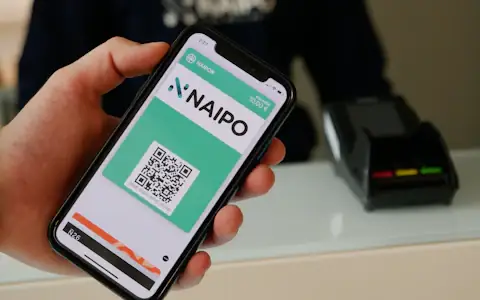
In January 2025, MobiKwik and Cred became the first non-banks to offer e₹ wallets, with Yes Bank as the sponsor bank. Users complete video KYC, load the wallet through UPI, and can send up to ₹10,000 per transfer and ₹50,000 a day. This matters more than it looks. Most Indians already live inside a handful of payment apps, and asking them to download a separate bank wallet for a pilot was always a hard sell.
The features that make it more than a copy of UPI
Programmable money
This is the e₹'s real selling point. A government department or an employer can attach conditions to the money it sends: an expiry date, a location, a merchant category, even a specific merchant. The wallet shows the user what those conditions are. The RBI's annual report pointed to pilots such as direct benefit transfers under Odisha's Subhadra Yojana and company-issued fuel and meal allowances.
Picture a state scheme paying a farmer in Koraput a fertiliser subsidy that can only be spent at registered agri-input shops before the sowing season ends. That is hard to do cleanly with bank transfers. With programmable e₹ it is a setting.
Offline payments
The RBI said in its 2024-25 annual report that an offline capability had been introduced so payments can work with weak or no connectivity, though it has not published usage numbers. For a country where a trip into a hill district can mean losing signal for hours, this is the one feature that cash still beats every app on.
Cross-border ambitions
The RBI has said it is exploring cross-border CBDC pilots, without giving a timeline. If you want to understand how central banks are thinking about that, our pieces on Project mBridge and Project Nexus cover the two main models.
The e₹ will not win by being a faster UPI. It wins only where money needs rules attached.
So why is everyday usage still small?
Put the e₹ next to UPI and the scale gap is stark. UPI handled an average of about 802 million transactions a day in September 2026. The e₹ took roughly three years to reach 120 million in total. Most people do not have a problem that the e₹ solves better than what they already use, which is why the RBI keeps leaning on programmability and government flows. We look at that trade-off in detail in e₹ vs UPI.
There is also no reward for holding it. No interest, plus a per-transaction cap on some wallets, makes the e₹ a pass-through rather than a place to keep money. That is by design, and we think it is the right call for financial stability, but it limits organic growth.
What to watch next
- Government payouts. If more state schemes move subsidies onto programmable e₹, user numbers will rise for reasons that have little to do with consumer choice.
- Circulation in 2026-27. Whether the March 2026 dip reverses will say a lot about genuine demand.
- Wholesale tokenisation. The bond and certificate-of-deposit trials could turn out to be the quieter success story.
- Cross-border pilots. Any formal announcement would change the conversation for the large Indian diaspora.
Figures are from RBI publications and statements reported by Indian media. Circulation figures are end-March totals for retail and wholesale e₹ combined.
Frequently asked questions
Is the digital rupee the same as UPI?
No. UPI moves money between bank accounts, while the e₹ is money issued directly by the RBI and held in a wallet. An e₹ wallet can scan UPI QR codes, but wallet-to-wallet e₹ payments settle without touching a bank account.
Does the e₹ pay interest?
No. The RBI pays no interest on e₹ wallet balances because the currency is designed to work like cash rather than a savings product.
How many people use India's digital rupee?
RBI Deputy Governor T Rabi Sankar said in December 2025 that a little over 8 million people were using the retail e₹, with more than 120 million transactions completed since the pilot began.
Sources and further reading
- RBI: FAQs on Central Bank Digital Currency (e₹)
- RBI Handbook: eRupee in Circulation, e₹-R and e₹-W
- Business Standard: Retail CBDC transactions hit 120 mn, value crosses Rs 28,000 crore
- Outlook Money: CBDC retail pilot reaches 6 million users, says RBI annual report
- Business Standard: MobiKwik, Cred first non-banks to offer CBDC
- Outlook Money: UPI processes 24.07 billion transactions in September 2026
This article is for general information and is not financial, legal or tax advice. Figures are as reported by the sources above at the time of writing.